





The Illusion of Control: Rethinking America’s Strategy Toward Iran.
This article offers a critical examination of escalating tensions between the United States and Iran, framing the situation as more than a geopolitical standoff. It argues that the current trajectory reflects a broader failure of collective international responsibility, where some actors intensify pressure without clear limits while others remain largely passive. Moving beyond strategic rhetoric, the piece underscores the human dimension of the crisis, highlighting the everyday uncertainty faced by millions affected by decisions beyond their control. It concludes that de-escalation is not merely a technical process but a matter of political will, restraint, and the capacity to accept limits. Without such a shift, the normalization of crisis risks becoming the most dangerous outcome.

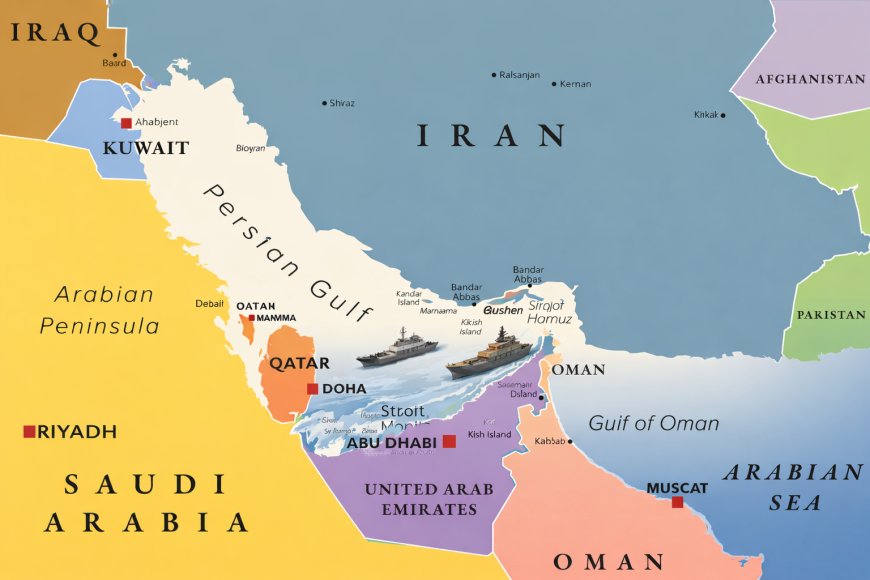
The Illusion of Control: Rethinking America’s Strategy Toward Iran. There is something very distressing about all this coming together, and it’s not just the ships, or the oil, or the headlines which flash for a couple of hours and then vanish. The ease. This constant quiet assumption that this is OK, that this is just one more pressure cycle, another calculated action on a board that someone somewhere still has a feeling that they understand. But the reality seems weightier than that. And to be honest, it’s seemed heavy for a while now. What we are watching is not strategy in its polished form. It is a repetition. A pattern that refuses to die. Pressure, escalation, reaction, pressure. Just this time, as though the result is going to turn out differently, just because the language was sharpened or the tools more accurate. The United States speaks the language of control. Of leverage. Of calibrated force. But what is actually occurring bears little resemblance to control whatsoever. It resembles friction. A constant, grinding, directionless friction. Targets are struck, statements made, positions hardened, and still nothing is settled. Nothing truly shifts. And the world, beyond it, watches closely. Or worse, pretends not to. Oil climbs. Markets tighten. Shipping lanes feel much thinner, nearly fragile. You can feel it even beyond policy quarters. Gas stations, freight costs, hushed discussions about things that have nothing to do with foreign policy. The ripple is real. It touches more than anyone wants to acknowledge. But what is troubling more than the economic strain is the intellectual complacency on which it’s based. There is still this assumption that pressure will provide clarity. That when you press hard enough, and for long enough, the other side will bend. That in some way in all this there is a breaking point that can be manipulated. It is a dangerous belief. Because maybe the opposite is happening. What if pressure wasn’t sapping the system, but tightening it. What if every strike, every threat, every escalation is not creating space for negotiation, but closing it. Quietly. Incrementally. Irreversibly. This is not speculation. Over decades, across regions, it’s something we have seen before. Systems that are under pressure do not necessarily fracture. Sometimes they consolidate. At other times they grow stiffer, more defensive, more sure of themselves. And yet they continue with the same approach. No one pauses long enough to pose the uncomfortable question; it just does not happen. Not the public version of it, the real one. What if this is not working. Not optics-wise or as short-term signaling, but strategic wise. And what if the tools they're using are the ultimate mismatch with the desired end result. Because, at this moment, the distance from action to result is growing wider. Military capacity is being exercised here. That part is clear. But strategic movement. That is far less obvious. And yet the world does not intervene in a meaningful way. There is talk, of course. There are statements. Concerns carefully worded, appeals for restraint, procedural terminology that carves out space but hardly changes direction. Everyone acknowledges the risk. There is no one to take ownership of cutting it. It’s a form of collective reluctance. Or perhaps something worse. Quietly submitting to the idea that this is just what this will be. But they don’t have to be. The world doesn't need more of this extended struggle of miscalculation and pride. It doesn’t need another slow crisis spreading through economies — one that rips apart economies, skews priorities and drags entire communities in cycles they didn’t decide to embrace. And yet, here we are. Watching it take shape again. In conflicts like this there is a time when the options for moving forward are narrowed. Not because options vanish, but because the willingness to accept them does. Pride steps in. Domestic pressures build. Leaders start to exhibit strength rather than judgment. That moment feels close now. The United States still acts as if pressure can still be finely tuned into compliance. Iran is acting as though the current is no longer about negotiation, but about survival. And the rest of the international system remains somewhere else. Concerned, hurt, but mostly inactive. No one is doing enough. Not the ones escalating. Not the ones watching. Not those who announce they mediate but never commit themselves. It is a collective failure, however unevenly distributed. And the price of that failure won’t be abstract. It will manifest itself in the calmness of markets, in institutional confidence, in the silent decay of trust between states that once believed in some semblance of order. It will manifest in people’s lives who have no say in any of this but will bear its burden nevertheless. That’s the section that is uncomfortable to sit by. The human element beneath the plan. We talk of leverage and deterrence, but underneath those words are millions of people waking up into uncertainty, millions of people listening for signals they don’t yet understand, millions who try to make sense of decisions made way above them. And yet the cycle goes on. One of the hardest realities to accept is that de-escalation is not a technical issue. It is a political and psychological one. The mechanisms exist. They always have. Communication channels, phased agreements, mutual concessions. None of this is new. What is missing is the desire. The readiness to retreat, without presenting that as defeat. And the ability to acknowledge limits without seeing them as cowardice. What’s more, the acceptance that control, in cases like these is an illusion. That’s a part nobody wants to say out loud. Because it asks a different sort of question. Not what to do to win, but what to stop doing. And that question does not sit easily in most rooms that make decisions. But it should. Because the real danger now isn’t that escalation is possible. That has already been established. Really the danger is in that it becomes a habit. That it never leaves behind, not because it is effective, but because no one has the bravery, or the acuity, to interrupt that. If that happens this will not only be a failure of strategy. It is responsibility failure.
What's Your Reaction?