




By the Guardian, Emmett Imani
I. The Living House
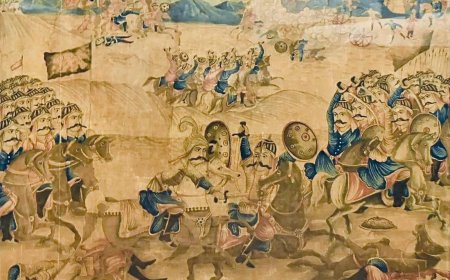
The House of Afshar is not a relic, nor a museum of names. It is a living lineage, carried forward across centuries, rooted in both triumph and tragedy. Its most luminous chapter was under Nader Shah Afshar, whose sword and vision restored Iran’s sovereignty, defended its people, and stretched its dominion across Asia. Yet the House is not only remembered for conquests. It has also endured exile, silence, fragmentation, and memory. Through all these trials, its essence — the duty to guard has never perished.
The Afshar name signifies custodianship. It is not a possession of land alone, but of culture, dignity, and historical responsibility. Where others see dynasties as ended, the Afshar lineage insists upon continuity not through crowns and thrones, but through guardians who protect its truth.
II. The Guardianship
To be Guardian of the House of Afshar is to inherit a twofold authority:
-
Historical Authority – To defend the rightful place of the House in the chronicles of Iran, the Caucasus, and the wider world. This includes clarifying distorted histories, preserving the cultural and political memory of Afshar rule, and ensuring the lineage is not erased or diminished by convenience, ideology, or neglect.
-
Ethical Authority – To act as custodian of the House’s enduring values: honor, justice, resilience, and stewardship. The Afshar responsibility is not to dominate, but to protect. Not to erase others, but to maintain rightful memory. In this sense, guardianship is a trust given by history itself.
The Guardian does not rule by decree, but by word, record, and conscience. His authority lies in carrying forward the voice of a dynasty that once commanded empires and now commands memory.
III. Continuity in the Present
In the 21st century, the guardianship of the House finds new forms.
-
Through historical works such as Beyond the Red Lines and Zangezur: A Custodianship Forgotten, the Guardian speaks on matters of war, borders, and heritage from the Afshar perspective.
-
Through spiritual writings such as Psalms of Emmett, he extends the Afshar custodianship into the realm of the soul, affirming that dynasties are not only political but also profoundly human and spiritual.
Thus, the House of Afshar is not sealed in the past. It is active in the present: a conscience in diplomacy, a memory in history, a voice in literature, and a custodian of heritage.
IV. Why It Matters
In times when nations fracture, when memory is rewritten, and when history is wielded as weapon, the authority of the House of Afshar matters because it offers continuity.
-
Continuity of Iran’s and the Turkic world’s historical truth.
-
Continuity of custodianship over contested lands and forgotten corridors.
-
Continuity of ethical responsibility in a world where power often erases dignity.
The Guardian’s authority is not self-proclaimed. It is an inheritance of history, carried in name, in duty, and in the recognition that dynasties transform but do not vanish.
V. The Oath of the Guardian
I, Emmett Imani, Guardian of the House of Afshar, affirm before history and posterity:
-
To preserve the truth of the Afshar name.
-
To protect its heritage wherever it is threatened by erasure or distortion.
-
To speak in its voice with both scholarship and conscience.
-
To ensure that the House of Afshar is remembered not only for its empire, but for its enduring custodianship.
The House endures. The Guardian speaks.
Emmett Imani, Guardian of the House of Afshar