
Shah of Shahs · Napoleon of Persia
Nader Shah Afshar
From a shepherd's son sold into slavery to the master of three continents — the extraordinary life of history's most audacious conqueror.
The Early Years
Born of Hardship, Forged by Will
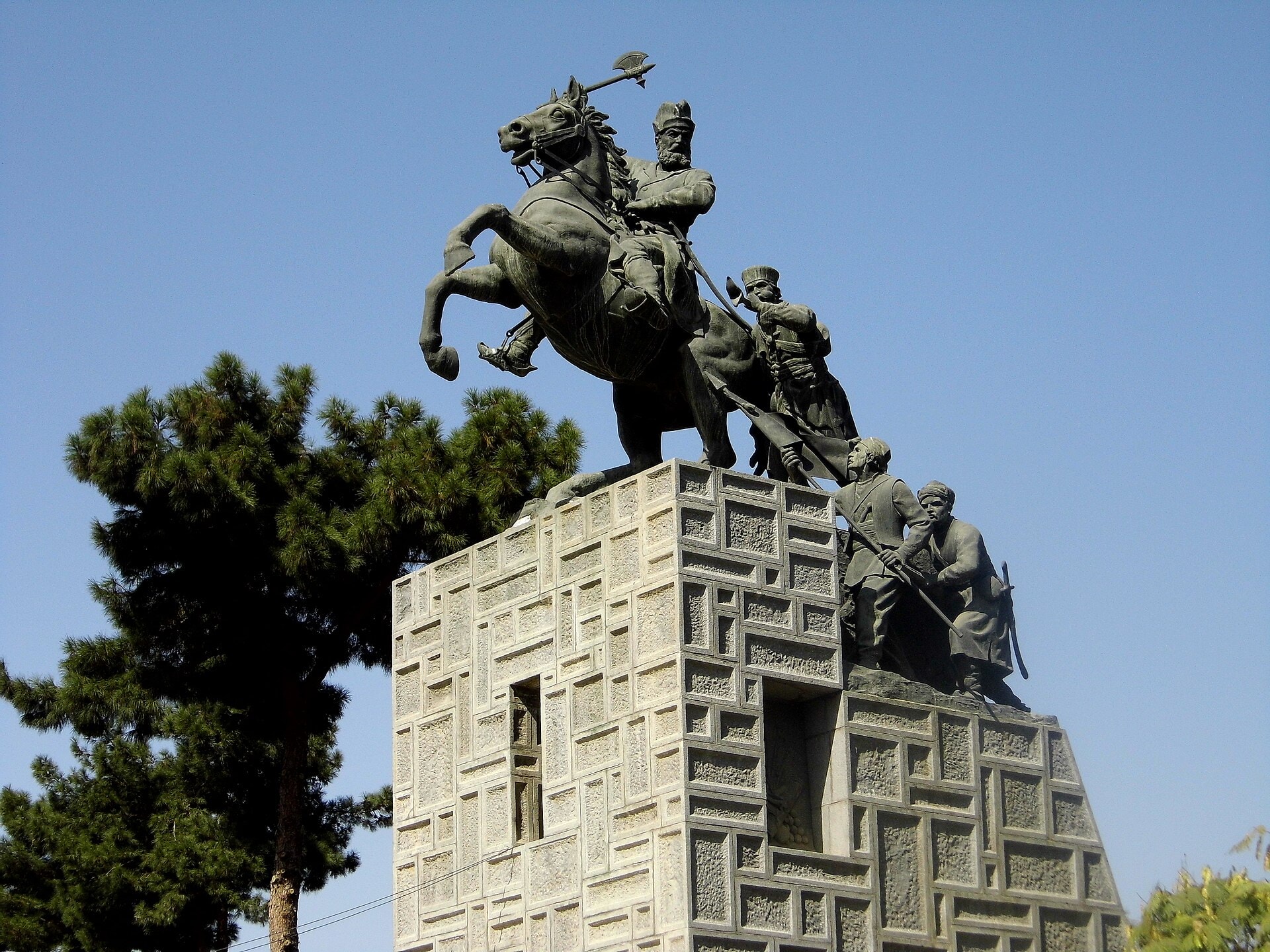
Nader Qoli Beg was born in 1688 in the village of Dastgerd, near Kalat in Khorasan, northeastern Persia. His father, a humble shepherd and furrier of the Qereqlu branch of the Afshar tribe, died while Nader was still a child. Shortly after, Nader and his mother were captured by Uzbek raiders and sold into slavery.
He eventually escaped his captors and, through sheer force of personality and martial talent, gathered a small band of followers. By his late twenties he had become a formidable local commander — disciplined, tactically brilliant, and utterly fearless. The hardships of his youth had forged in him a will of iron and an ambition that knew no ceiling.
The Ascent to Power
Saviour of Persia
In 1726, Nader offered his military services to the Safavid Shah Tahmasp II, whose empire had been shattered by Afghan invaders. Within four years, Nader had expelled the Afghans, recaptured Isfahan, and driven the Ottomans back from the Caucasus — feats that no Persian general had managed in decades.
His reward was power. Nader became the de facto ruler of Persia, with the Safavid Shah reduced to a figurehead. In 1732 he deposed Tahmasp II and installed the infant Abbas III as a puppet. Then, in 1736, at the great assembly on the Plain of Moghan, he cast aside all pretence — deposing the last Safavid and crowning himself Nader Shah, King of Kings of Persia.
The Campaigns
A Lifetime of Conquest
Liberation of Persia
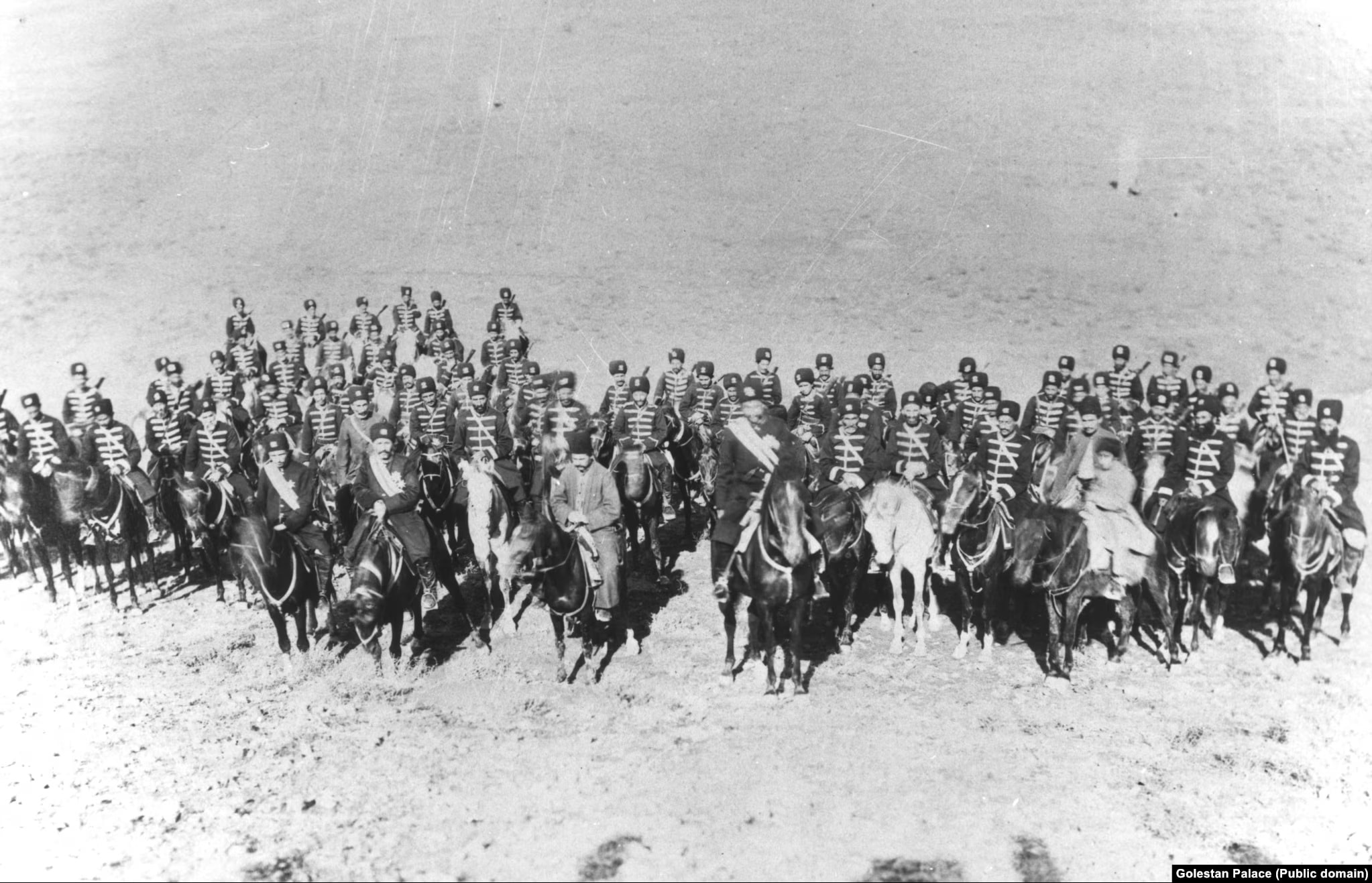
Nader's first campaigns drove the Hotaki Afghans from Isfahan and Khorasan, reunifying a Persia that had been fractured for nearly a decade. His speed of movement and tactical innovation stunned enemies who had grown accustomed to Persian weakness.
Ottoman & Russian Wars
Nader waged a series of campaigns against the Ottoman Empire in the west and negotiated the withdrawal of Russian forces from the Caspian coast, restoring Persian sovereignty over the Caucasus and reclaiming territories lost under the Safavids.
Invasion of India
Nader's most celebrated campaign. Crossing the Khyber Pass with 55,000 men, he annihilated the Mughal army at the Battle of Karnal in under three hours. He entered Delhi, seized the Peacock Throne, the Koh-i-Noor and Darya-ye Noor diamonds — and returned with wealth so vast he suspended Persian taxation for three years.
Central Asian Conquests
Following the Indian triumph, Nader turned north, subduing the Khanates of Bukhara and Khiva in Central Asia. At the height of his power, his empire stretched from the Caucasus to the Indus, and from the Persian Gulf to the Oxus River.
The Greatest Plunder in History
The Sack of Delhi, 1739
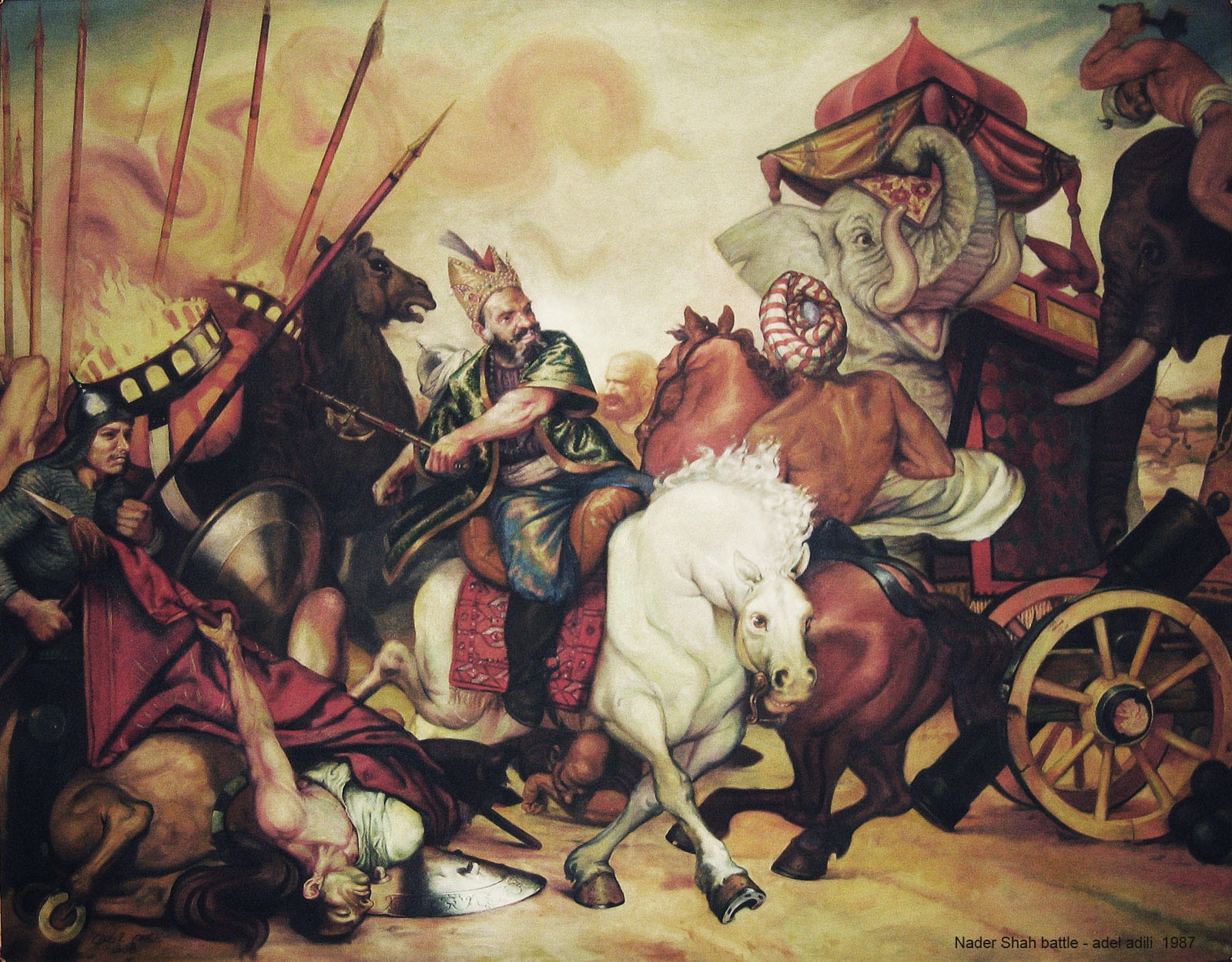
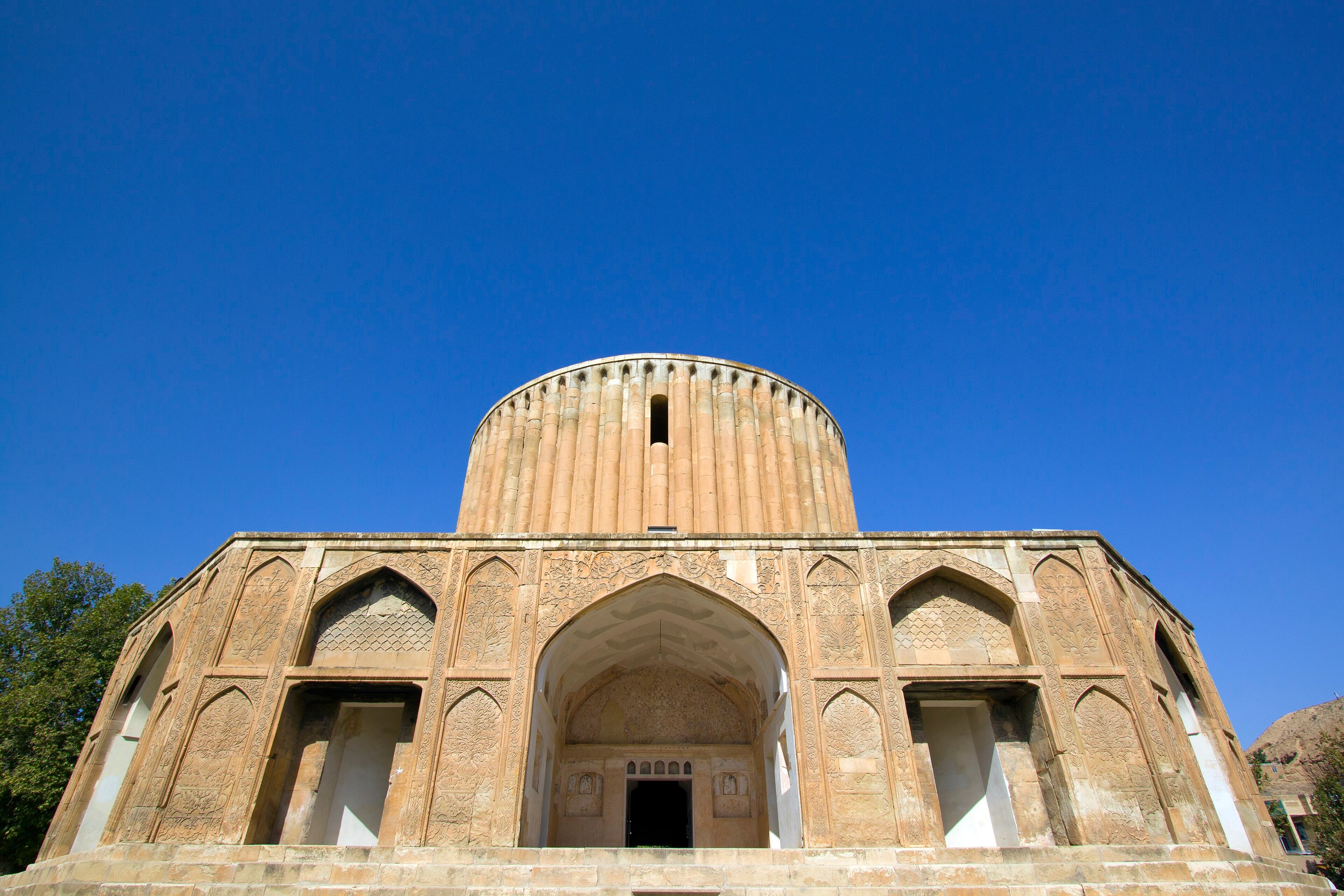
On 13 February 1739, Nader Shah's army met the Mughal Emperor Muhammad Shah at the Battle of Karnal, north of Delhi. The Mughal force — numbering over 300,000 men with 2,000 war elephants — was routed in under three hours. It was one of the most lopsided victories in military history.
Nader entered Delhi in triumph and was received by the Emperor. But when a rumour spread that Nader had been killed, Delhi's citizens massacred Persian soldiers. Nader's response was swift and terrible: he ordered a massacre that killed an estimated 20,000–30,000 people in a single day.
The plunder that followed was staggering. Nader seized the legendary Peacock Throne — encrusted with rubies, emeralds, and pearls — along with the Koh-i-Noor diamond, the Darya-ye Noor diamond, and treasures estimated at 700 million rupees. He also took 10,000 horses, 7,000 elephants, and 10,000 camels laden with gold and silver. Upon his return to Persia, he suspended all taxation for three full years.
The Enduring Legacy
Napoleon of Persia
Nader Shah was assassinated in June 1747 by a conspiracy of his own officers, who feared his increasingly erratic and brutal rule in his final years. He was 58. The empire he had built — the largest Persia had seen since the Achaemenids — fragmented within a generation.
Yet his legacy endures. Military historians rank him among the greatest commanders in history, alongside Alexander, Caesar, and Napoleon — the comparison that earned him the epithet 'Napoleon of Persia.' He restored Persian sovereignty, expanded its borders to their greatest extent in centuries, and demonstrated that a man of no birth could, through genius and will, reshape the world.
For the House of Afshar, Nader Shah is more than a historical figure — he is the founding father, the supreme expression of what the Afshar people are capable of. His story is our story: a story of rising from nothing to command everything.
"From a shepherd's son to the master of three continents — Nader Shah Afshar remains one of history's most extraordinary figures."
Continue Exploring